Doctor Referral Marketing: How Surgeons Win More Physician and Patient Referrals

Updated: 3 days ago
What Doctor Referral Marketing Means for Surgeons

Doctor referral marketing is how surgeons and specialists turn other physicians, and past patients, into a steady source of new patients. It works for any practice that's looking to bring in new patients. Medical practices deal with people's lives which is why patients are very careful when it comes to visiting a medical practice.
Surgical practices have to earn trust to attract new patients. For surgeons, referrals are one of the main ways new patients arrive.
Referrals are essential for medical practices in that it helps generate new patients as well as build good relationships that promote patient retention.
Although doctor referral marketing is an effective marketing strategy, it's still associated with challenges. The process is time intensive as you need to build great connections and relationships which can take years before yielding results.
Even with this time-intensive relationship you've built, this marketing strategy may not yield the kind of results you expect most likely due to the poor hands-off process.
A physician may refer a patient to a surgeon, but the difficulty linked with self-scheduling an appointment may frustrate the patient resulting in a no-show referral patient. The poor referral tracking system is also another challenge linked to referral marketing for medical practices.
Referral volume keeps growing. The share of U.S. doctor visits that end in a referral nearly doubled from 1999 to 2009, to about 105 million referrals a year (Archives of Internal Medicine, 2012). Yet referring doctors often never learn whether the patient saw the specialist (Milbank Quarterly, 2011).

How Surgical Referrals Work

Doctor referral marketing for surgical practices is effective, but for it to yield desired results you need to know the process. Understanding the processes involved in doctor referral marketing for surgeons helps you get good results and make adjustments when needed.
1. The Referring Physician
The referring physician is the physician that directs a patient to a surgeon or other specialist, directs the patient to make a referral, or controls the referral made by the patient or practice. The referring physician has an important role to play in the growth and stability of a surgical practice.
Referring physicians send a variety of patients and surgical cases to a practice to help build the clinic client base as well as provide clinical cases for research and teaching purposes.
2. The Receiving Surgeon
The receiving surgeon is the one the patient is referred to. The surgeon's job is to treat the referred patient well and report back to the referring doctor.
This will even motivate the referring physician to direct more patients to you when the need arises. A receiving physician also has a major role to play in building and maintaining strong relationships with the referring doctor or practice.
3. The Referred Patient
The patient has to book and show up. Many never do, so call referred patients within a day instead of waiting for them to call you.
8 Doctor Referral Marketing Strategies for Surgeons
Each type of surgeon has its own referral network. Know yours before you start doctor referral marketing.

Doctor referral marketing by surgeon type | ||
Surgeon | Top referring doctors | What they want from you |
Plastic surgeon | Dermatologists, OB/GYNs, bariatric surgeons, med spas | Reconstruction after skin cancer, mommy makeovers, body contouring after weight loss |
Orthopedic surgeon | Primary care, physical therapists, sports medicine | Same-week visits and clear return-to-activity plans |
Spine surgeon | Pain medicine, chiropractors, primary care | Conservative care first, and fast MRI review |
Bariatric surgeon | Primary care, endocrinology, sleep medicine | Help with insurance approval and progress updates |
Strategy 1: Find Your Top Referring Doctors
Identifying the top referral sources for a surgical practice will determine the relationship worth maintaining and the one taking your time away. One is by getting a referral tracking spreadsheet to record your referral program patients and the physician or practice that referred them.
You can also utilize a referral code such that the code represents a physician or practice that's referring to the patient. With these methods, you can easily determine the number of patients each referring physician or practice brings in and rank your top referral sources.
Once you know your top referral sources, you will also find out which of these strategies are effective and which aren't.
Strategy 2: Build Relationships With Referring Physicians
The only way you can make the most of referral marketing is to build strong relationships with your referral sources. This way you or your practice easily comes to their mind when a referral process is to be initiated.
There are different strategies for building strong relationships with your sources providing educational resources, doctors are always learning to improve the quality of care they give to patients. You can help a specialist or practice by providing educational resources for them.
In addition, you should also send personalized thank-you notes to them from time to time, appreciating your sources whenever you can help you develop a good relationship. Invite them to events where they can learn, teach, network, and see how your relationship will greatly improve.
Strategy 3: See Referred Patients Fast
The quality of your treatment service plays a major role in the referrals you can generate. When you provide excellent patient care, generating referrals won't be so difficult because referring physicians know any patients directed to your practice will get the maximum care.
There are different strategies you can adopt to provide exceptional patient care. They include investing in staff training to boost their performance and service quality.

You should also implement patient satisfaction surveys to know if the patients are satisfied with your services or not to make needed adjustments. Reviews and online reputation management are also essential for this strategy.
As you appreciate your positive reviews, you should also address negative reviews professionally.
Strategy 4: Stay Top of Mind With Referrers
It's not enough to identify your top referral sources and send them thank-you notes when you get referrals. You should also actively try to stay on the mind of your different referral sources using different marketing strategies.
Strategies for marketing to referral sources include sending newsletters to keep up with them as well as promote your practice.
Events hosting is another strategy you can use to market to your referral sources, host one and invite them. Interact with your referral sources on social media, and engage them regularly so your practice is on top of their mind when the need to refer arises.
Strategy 5: Track Every Referral Through to Surgery
Importance of monitoring and analyzing referral sources to understand what's working and what's not. There are manual and automatic methods for monitoring and analyzing referral sources. The manual method involves the use of a spreadsheet to record referred patients and the referring physician.
The manual method becomes more challenging if you get many referrals in your practice and your client base increase. The automated digital method for monitoring and analyzing referral sources involves the use of referral trackers.
You can easily track referral patterns and analyze referral source feedback with referral program software.

Surgical referral metrics to track | |
Metric | What it tells you |
Referrals per doctor, per month | Who your real sources are |
Referral-to-consult rate | How many referred patients actually book |
Consult-to-surgery rate | Which referrers send good-fit patients |
Days from referral to first visit | Whether patients wait too long |
Reports sent back within 48 hours | Whether you close the loop |
Strategy 6: Teach Referrers When to Send a Surgical Case
One way to showcase your commitment and appreciation for your referral sources is to provide them with educational resources. Providing them with this helps them in career advancement and boosts their performance at work.
There are different strategies for providing educational resources for your referral sources. Hosting webinars is one of them, offering virtual lessons, training courses, demonstrations, case studies, and other things to educate your sources.
Sharing white papers is another means to provide educational resources for your referral sources and if you're capable of providing in-person training for your referral sources that is also a great idea.
Strategy 7: Use Referral Tracking Software
A strategy to apply to get the most out of doctor referral marketing for your surgical practice is to utilize referral marketing software. With software like this, you can easily track and manage your referrals. This is important as it makes it easy to find your best referral sources, and easily discover anything that's going wrong in the referral program.
Strategies for using referral marketing software include implementing a referral program. The referral program software is available to track your referral programs no matter how challenging the program is.
You can also use referral analytics tools to monitor analytics and conversions. You can also automate referral tracking with referral tracking tools, which is more efficient and time effective than manual referral tracking.
Strategy 8: Partner With Referral Sources, Legally
Partnering with referral sources to create mutual benefits is another strategy you can adopt for maximum results with your referral program. Partnering up with referral sources will increase the number of referred patients you get in your practice.
But ensure you offer quality care service and are worthy of being referred before considering partnering with potential referral sources.
The strategies for partnering with referral sources include reaching out to potential sources you would love to partner with and informing them of the value you're wishing to add to their career or practice to ensure a mutually beneficial relationship is built.
Creating a formal referral agreement that clearly explains the roles of both parties to hold both parties accountable is a method to partner with potential referral sources. Employing co-marketing campaigns and cross-promotion is another mutually beneficial strategy you can use to partner with your referral sources.
Be careful with incentives. The federal Anti-Kickback Statute and Stark Law bar paying for referrals, and many states have their own rules.
Referral rewards: what's allowed | ||
Practice | Rule of thumb | Why |
Paying a doctor per referral | Never | |
Gifts or cash to patients for referrals | Avoid for insured patients; check state law for cash-pay cosmetic cases | Federal and state anti-kickback rules |
Thank-you notes and outcome reports | Yes | Builds trust, no payment involved |
Educational talks and lunch-and-learns | Yes, kept modest | Value must not depend on referrals |
Physician Referral Marketing Services for Surgical Practices
Physician referral marketing is a vital strategy to leverage if your practice is growing and you want to bring in new patients. Having an established network of referral relationships can help your practice a lot.
A strategic physician referral marketing approach can go a long way to improving your strike rate with physicians. It can set you up for long-term fruitful relationships with referring physicians.
Intellius Medical offers physician referral marketing services for surgeons and plastic surgeons.
Referral Sources for Plastic Surgeons
The common patient referral sources for a plastic surgery practice include:
Patient-to-Patient Referrals
It is easier to get patient-to-patient referrals especially if you’re good at what you do. Most times you don’t need to do anything other than offer an exceptional medical service to your patient before they recommend you to their colleagues, friends, and family members. It helps that people believe recommendations from friends and loved ones more than they do advertisements.
In a study of 150 cosmetic surgery patients, how they were referred carried 21.5% of the decision, second only to the surgeon's experience.
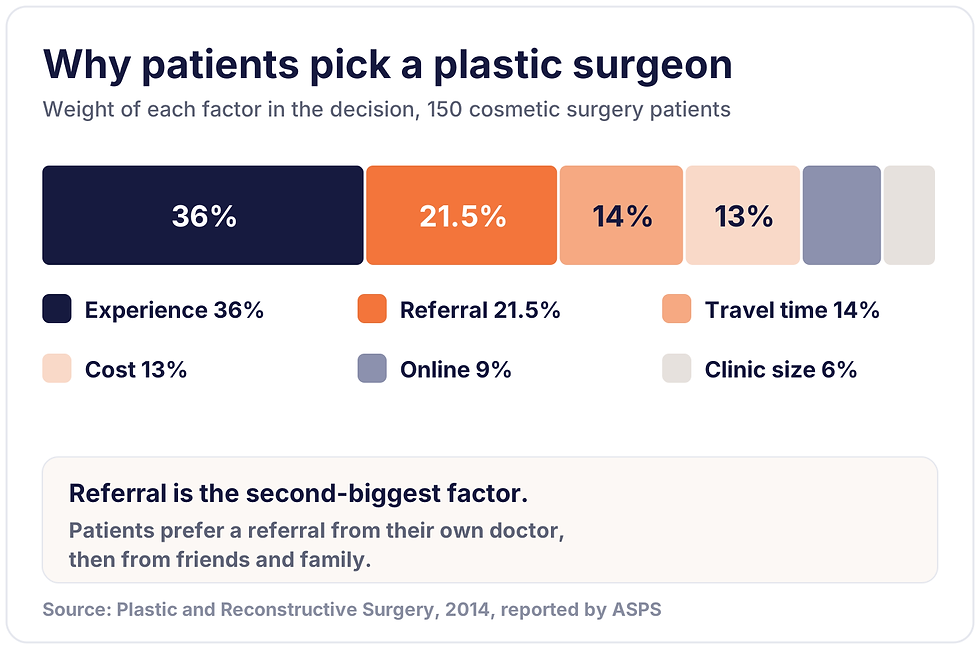
Thank patients who refer friends, but check your state's rules before offering any reward.
Doctor-to-Surgeon Referrals
Dermatologists, OB/GYNs and bariatric surgeons regularly send patients to plastic surgeons for skin cancer reconstruction, mommy makeovers and body contouring after weight loss.
How Surgeons Get More Referrals From Physicians
Get to know the referring physicians and establish a firm relationship.
Supply physicians with materials and articles that outline the conditions you regularly treat.
Share your success and testimonials with physicians.
Establish your expertise in your specific field.
Always thank and appreciate referring physicians.
Beyond Referrals: When Patients Find You First
Marketing a surgical practice is now more than relying on referrals and word of mouth. You can take things digital and leverage doctor marketing programs. A lot of patients now research healthcare providers online.
Hence, having a strong online presence is important so potential patients can locate you.
Physician referrals vs patient referrals vs search | |||
Physician referrals | Patient referrals | Google search | |
Who sends them | Other doctors | Past patients | The patient, on their own |
How you earn it | Fast consults, reports back | Great results, a simple ask | |
Best for | Orthopedic, spine, reconstruction | Cosmetic and plastic surgery | Every surgeon |
Weak spot | One doctor leaves, referrals stop | Hard to scale | Takes months to build |
For an effective marketing program, you need to:
Show Up When Patients Search for a Surgeon
This strategy includes leveraging a variety of marketing channels, such as search engine optimization (SEO), pay-per-click (PPC) advertising, and email marketing to increase your reach.
Work With a Surgical Marketing Agency
Doctor marketing services are offered by specialist agencies. Hire one that works with surgeons, like Intellius Medical, to run your whole marketing program.
A Physician Referral Marketing Plan for Surgeons
Creating a physician referral marketing plan is essential before starting the program. The plan is to guide you through the entire process and ensure you get good results.
To create an effective plan:
Use a Business Development System
The key to developing a good marketing plan is to use business development. Identify present and prospective referral sources and establish a business relationship with them.
Fix Referral Problems Fast
Develop a system to constantly monitor and measure your referral process, routinely improve service, and resolve problems as soon as they arise.
Invest in Physician Relationship Management (PRM) Software
This is a tool that provides you with an awareness of all your referral activity. Investing in a tool like this makes your referral process seamless and more effective.
Patient Referral Strategy for Plastic Surgeons
The best referral marketing strategies to adopt include:
Ask After the Final Result
Timing is essential when it comes to asking your patients for referrals. For surgery, ask once the patient is happy with the final result, often months after the operation. This strategy increases your chance of receiving enthusiastic referrals and recommendations.
Make Referring a Friend Easy
Another way to boost referrals is a simple refer-a-friend page on your website. You can reach a broader audience and expand your patient base by creating a simple signup process and making it easy for users to invite their friends.
Thought Leadership That Earns Surgeon Referrals
To attract more doctor referrals as a surgeon, position yourself as a trusted authority in your field. Share valuable insights through blogs, podcasts, or media interviews, emphasizing your practice’s unique strengths and successful patient outcomes. Engage with the local medical community by speaking at conferences or writing for industry publications. When other doctors recognize you as a leader, they will be more inclined to refer patients to you. Share success stories and data openly to build trust and keep your practice at the forefront of their minds when referrals are needed.
Events for Referral Coordinators and Office Staff
Host workshops, luncheons, or training sessions designed specifically for referral coordinators. Focus on relevant topics such as new treatments, efficient processes, or innovations in patient care. These events help create personal connections and demonstrate your appreciation for their role. Provide practical resources, like referral toolkits, and follow up with thank-you notes or surveys to gather feedback. By nurturing these relationships and simplifying their workflow, you’ll become their preferred partner, naturally increasing referral rates.
Referral Metrics Every Surgical Practice Should Track
Monitor key metrics such as referral volume, conversion rates, and patient outcomes to identify trends and opportunities. Use this data to determine which doctors refer the most patients or where bottlenecks occur. Share personalized reports with referring providers to showcase the success of your collaboration. If certain specialties are under-referring, tailor your communication to address their specific needs. Data-driven strategies eliminate guesswork, allowing you to focus on high-impact opportunities that drive results.
AI and Predictive Analytics in Referral Marketing
AI-powered tools can analyze referral patterns to predict which providers or specialties are likely to send more patients. Use these insights to prioritize outreach and personalize your messaging. Predictive analytics can also identify at-risk referrals, such as delays in follow-ups, enabling you to intervene promptly. Automate routine tasks like appointment reminders to free up your team’s time for relationship-building. This tech-driven approach makes the referral process more efficient, scalable, and effective.
AI assistants are becoming a referral source too. Our Dallas plastic surgery client's procedure pages are cited in ChatGPT and Google's AI Overviews, the result of AI search optimization.
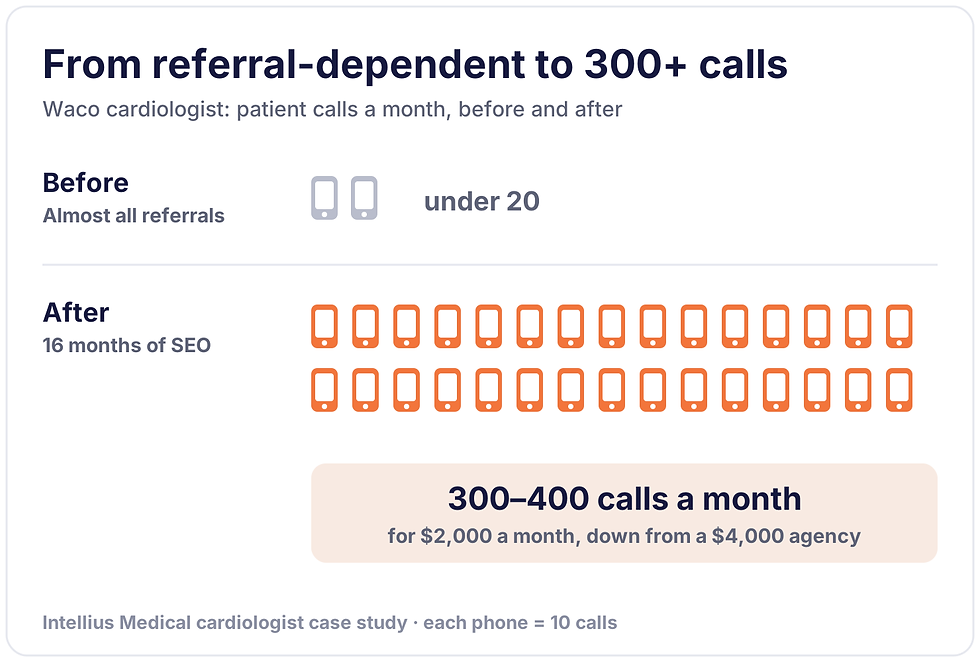
Case Study: From Referral-Dependent to 300+ Calls a Month
A Waco cardiologist came to us almost 100% referral-dependent, with fewer than 20 calls a month from primary care and ER doctors, word of mouth and walk-ins. Today the practice gets 300 to 400 calls a month.
Waco cardiologist: before and after | ||
Before | After | |
Where patients came from | Referrals, word of mouth, walk-ins | Search, Google Maps and referrals |
Website | Basic GoDaddy HTML site | WordPress site, $50 theme |
Content | No content strategy | 152 pages of core content |
Google Business Profile | Not managed | Updated twice a week |
Calls from Google Maps | Few | 1,540 |
Where to Start With Doctor Referral Marketing
Doctor referral marketing is so effective for growing a surgical practice because people tend to follow up with recommendations made by trusted and more knowledgeable individuals.
You can adopt several doctor referral marketing strategies and take advantage of the various benefits linked with this marketing method for your surgical practice.
To extend your quality treatment service to new patients, implement the strategies we've shared above to put doctor referral marketing to work for your surgical practice.
Doctor Referral Marketing FAQs
Why is doctor referral marketing important for surgeons?
It's important because it is an effective way for surgeons to get new patients by leveraging existing relationships with their colleagues. It also helps patients be referred to specialists who can better treat their health conditions.
Who are the best referral sources for surgeons?
For surgeons, referral sources include primary care providers, dermatologists, OB/GYNs, physical therapists, chiropractors, pain specialists, and other surgeons in your network.
You should ensure you possess diversified referral sources, avoid sticking to only one or two sources and make sure to widen your scope.
Can surgeons reward patients or doctors for referrals?
A medical practice can incentivize referral sources for more referrals by cross-promoting with referring practices and physicians. Be careful with rewards: paying for referrals can break federal and state law. Send thank you notes and appreciative emails to your referral sources to get more referrals.
Ensure you're offering as much value and reward as you can to your referral sources for more.
What are some strategies for providing educational resources to referral sources?
Providing educational resources for your referral sources is a strategy to use to get a good number of referrals from your sources.
The strategies to use for this include offering virtual lessons, and demonstrations, sharing white papers featuring in-depth reports on topics of interest to your referral sources and hosting physical training.
How can referral software help surgical practices track referrals?
Referral marketing software helps with tracking and managing referrals by creating, customizing, and automating your referral campaigns. Data is collected and recorded by this software making it easier to track and manage your surgical referrals than the manual method.
What are some benefits of partnering with referral sources?
Partnering with referral sources is extremely beneficial to the receiving practice and the referring physician or practice. It creates more awareness of your practice and increases your number of patients and practice revenue.
What are some common mistakes to avoid when implementing doctor referral marketing strategies?
One of the biggest mistakes you can make is partnering up with a physician or practice with a bad reputation, this may affect the way patients view your practice.
Poor communication between partnering parties is a common mistake with this strategy and this affects the success of the referral program.
Another common mistake is not identifying your top referral sources and tracking the success of your referral program. Contact us to know more information.