Plastic Surgery Marketing Agency in Texas: What It Does and Costs

Updated: 6 days ago
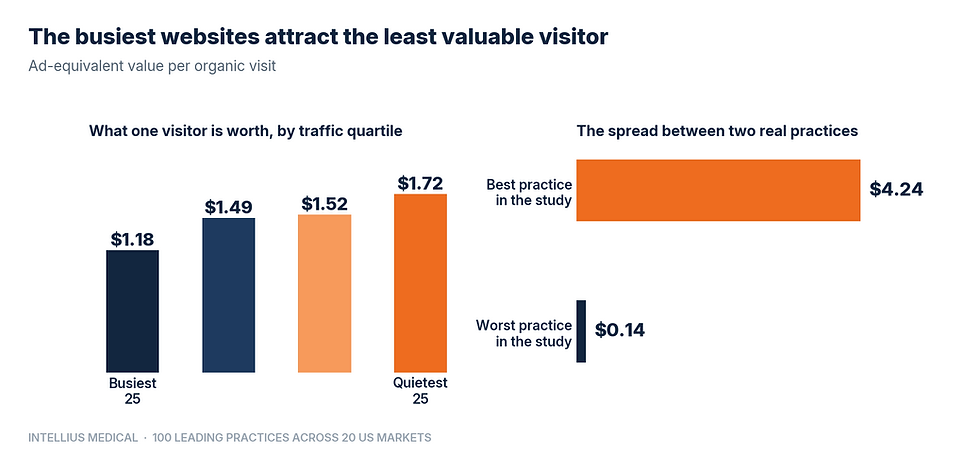
One rhinoplasty carries an average surgeon fee of $7,637 (ASPS), before anesthesia and facility costs. Five a year can fund a full year of plastic surgery marketing.
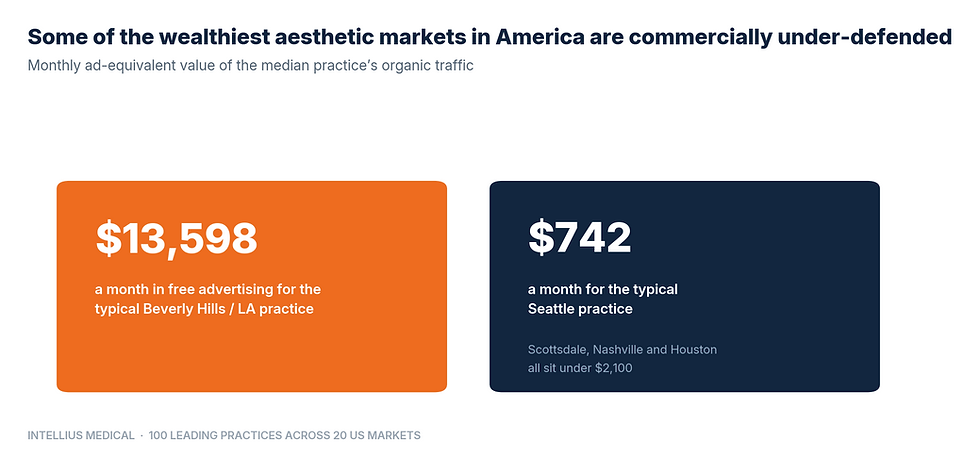
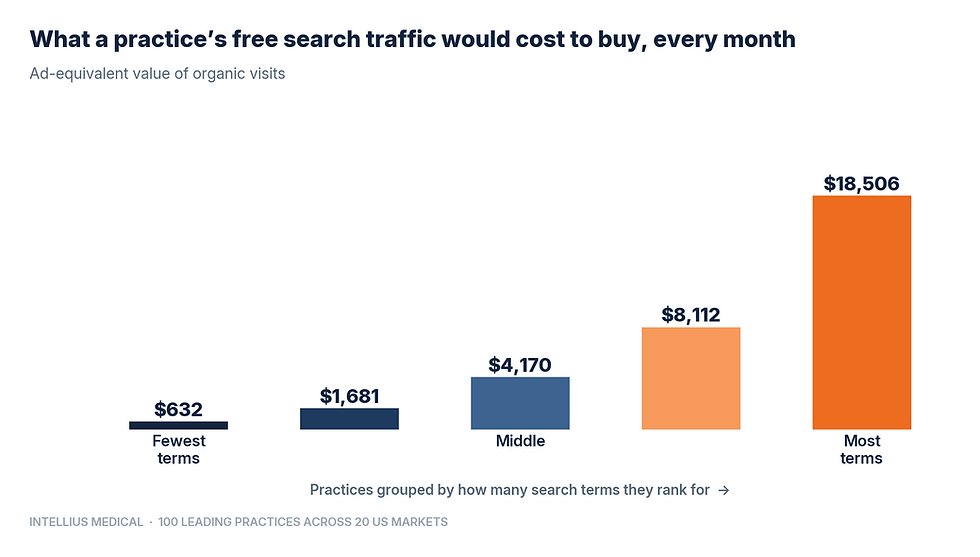
$18,506
a month in free traffic for the best-covered practices
$632
for the least-covered
$11,709
a month sitting unclaimed, per practice
30x
gap between leader and typical practice
That is the return on investment we see every day in this field. You are a skilled Texas surgeon, not a marketing expert, which is why surgeons hire a plastic surgery marketing agency, but the reality is that if you are not visible online, you are invisible to the modern patient.
What a Plastic Surgery Marketing Agency Covers
Digital marketing for a plastic surgeon isn't just a single action; it's a series of interconnected activities that are created to attract and convert high-value patients.
It starts with a high-converting, beautiful-looking website that tells your story and highlights your results with top-notch before and after photos.
This is the foundation upon which everything else is built. It then grows to encompass Search Engine Optimization (SEO) to make sure your practice shows up when people look for procedures in your city, such as tummy tuck Houston or breast augmentation Dallas.
It includes paid ads on Google to generate immediate demand, managing your online reputation to gain trust, and creating content to become an expert in your niche.
Here is what that looks like for a Texas surgeon. A Dallas plastic surgery practice we work with gets about 150 patient calls a month from organic search, across ten procedure lines. The practice runs at $500K+ a month in revenue.
Plastic surgery marketing agency results in Texas: a Dallas practice | |
What we built | Number |
Indexed URLs | 537 |
Blog posts answering patient questions | 366 |
Before-and-after case galleries | 48 |
Words of surgeon-reviewed content | 350K+ |
Patient calls from organic search | About 150 a month |
Source: Dallas plastic surgery SEO case study (organic search only, no ads).
Why a Cosmetic Surgery Marketing Agency Should Be a Specialist
Generic marketing does not work for your specialty; plastic surgery marketing is its own discipline. People do not decide to get a facelift or a tummy tuck on a whim.
They are making a very costly, emotional, and high-stakes decision.
This is a psychological choice that a cosmetic surgery marketing agency should be aware of.
They need to know that patients are searching for things like "breast augmentation before and after" or "best rhinoplasty surgeon in Dallas" and that they will scrutinize every image and review.
A plastic surgery marketing agency needs to lead them from their initial curiosity to a scheduled appointment – something quite different from selling a product or a low-consideration service.
The Money Math: $36k a Year vs Five Cases
In a competitive plastic surgery market like Dallas or Houston, a realistic and effective marketing budget begins at $3,000 per month. That is $36,000 a year.
It might sound like a lot, but look at it from a different angle. The average surgeon fee alone is $7,637 for a rhinoplasty, $8,174 for a tummy tuck and $4,875 for a breast augmentation, before anesthesia and facility fees.
If your plastic surgery marketing agency brings you only 4 or 5 new procedures per year, it has paid for itself.
The fact is that you need a Plastic Surgery marketing agency to handle a comprehensive strategy for you.
The real question is not "can I afford to market?" but "can I afford not to?" The cost of a poor strategy is far greater than the investment in a good plastic surgery marketing agency.

Marketing Can't Fix a Front Desk That Calls Back in 3 Days
We need to have a brutally honest conversation. Plastic surgery marketing brings potential patients to your digital doorstep. It gets them to fill out a contact form or pick up the phone.
However, if your front desk staff takes three days to return a voicemail, or they are rude, or cannot answer basic questions about financing, your marketing money is being set on fire.
Your conversion process is your sales pipeline, and if it leaks, you will never fill your surgical calendar.
Before you hire a plastic surgery marketing agency or spend a dime on ads, make sure your practice is ready to convert the leads.

Your conversion process is your sales pipeline, and if it leaks, you will never fill your surgical calendar.
What a Plastic Surgery Marketing Agency Costs in Texas
Hiring a plastic surgery marketing agency is not a one-size-fits-all expense. The investment must align with your specific goals, the competition in your local market, and the size of your practice.
Investment Tier | Monthly Budget | What It Typically Includes |
Basic Maintenance | $1,000 - $2,000 | Website maintenance, technical SEO, basic social media posting. |
Core Growth | $2,500 - $5,000 | Comprehensive SEO, content marketing, social media management, initial ad campaigns. |
Competitive Market | $5,000 - $8,000 | Full SEO, aggressive paid ads, professional photography, robust content, and reputation management. |
Dominance | $8,000 - $12,000+ | All-encompassing strategy across all channels, including video marketing, Generative Engine Optimization (GEO) for AI platforms, and advanced analytics. |
Brand Expansion | $15,000+ | Multi-location strategies, brand campaigns, and significant market share acquisition. |
Source: LocaliQ healthcare search advertising benchmarks (3,542 US campaigns, Oct 2024 to Sep 2025). The healthcare average was $66.02 a lead.
Why Most Plastic Surgery Marketing Agency Campaigns Fail
Treating marketing as an expense, not an investment: You do not see results overnight.
Focusing on vanity metrics: A high number of "likes" or website "visitors" means nothing if they don't turn into consultations.
Lack of a clear strategy: Doing a little bit of everything without a plan is a recipe for wasted budget.
Ignoring the website: A slow, outdated, or hard-to-navigate website will kill conversions.
Not tracking results: If you cannot measure it, you cannot improve it.

SEO for Plastic Surgeons in Austin, Dallas and Houston
Plastic surgery SEO is a way to get your website or practice page to show up on the top of search results when potential patients search for plastic surgeons or services/procedures provided by plastic surgeons on search engines like Google.
You sure want potential patients to see your website first when they search for plastic surgeons in Austin or plastic procedures in Austin, TX.
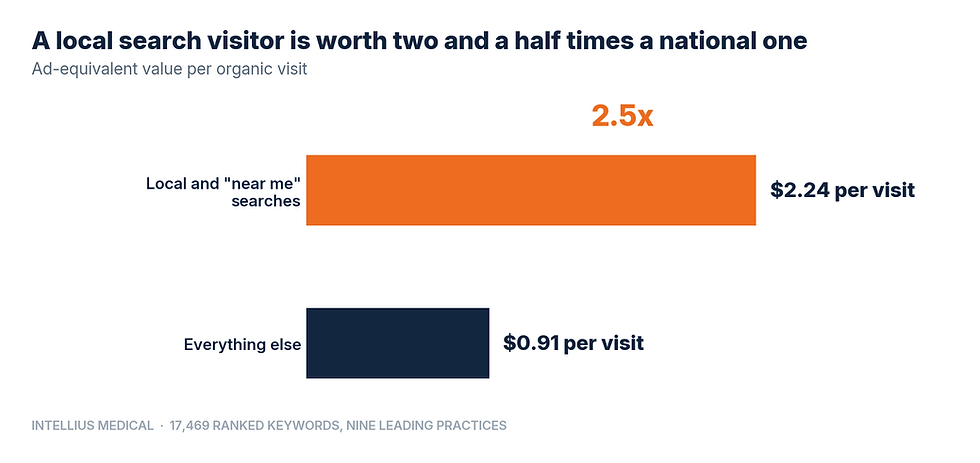
Houston is the biggest prize. In our 25-city study, Houston brought the most plastic surgery patient contacts, up to 1,580 a month. “Mommy makeover Houston” alone gets 1,100 searches a month at a keyword difficulty of 0.

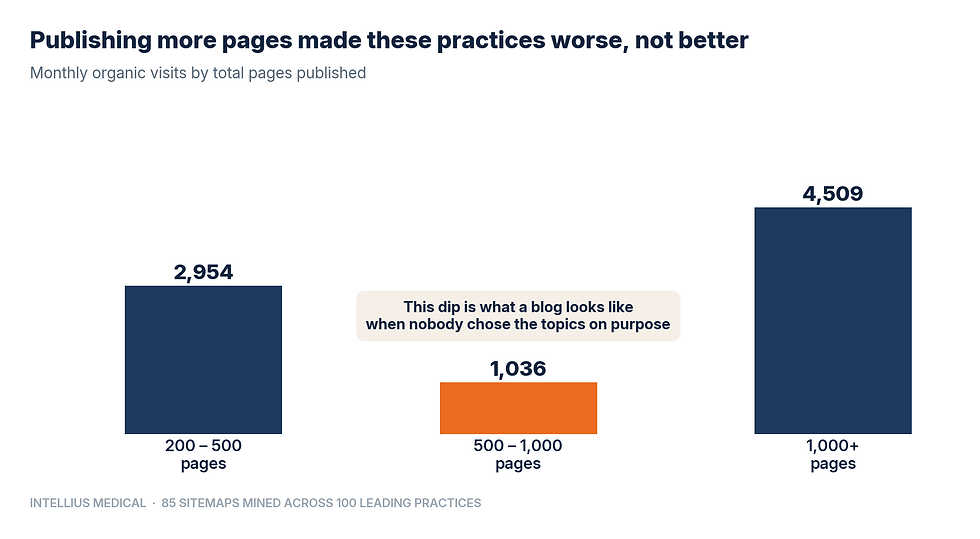
This process requires a lot of research into the questions and problems that patients looking for a plastic surgeon are searching for, and then developing content to address these questions. It involves technical modifications to your website to make it easy for search engines to find and index your pages.
Local SEO is especially important because it targets patients within your local area. Good SEO isn't something that can be done overnight, but it's the most cost-effective method to drive a consistent flow of highly qualified, high-intent patients over time.
Google Ads for Plastic Surgeons: The Landing Page Beats the Ad
Paid advertising, primarily through Google Ads, is your "on-demand" traffic source. It can place your practice in front of people who are ready to book a procedure right away.
But this traffic costs money. In our 25-city study, one patient contact from Google Ads cost $10 to $40, and every procedure paid at least 108 times that. Costs vary by market and procedure.
Your landing page is the most important part of your ads. When your ad guarantees a consultation for a facelift, but redirects users to your generic homepage, you've just put your money down a black hole.
The landing page should be laser-focused on the procedure, as promised in the ad, and it should make it easy for anyone to book an appointment or call your office line.
The 9 PM Test
This is the straightforward test to determine the reality of your online presence. By 9 PM, when most surgeries are done and patients are relaxing at home with phones, your competitors are live on Instagram, posting content, and running ads.
Are you doing all these, too? This is the time when patients are researching. If you're not there during these prime research hours, you're giving your potential patients away.
The Video Engine: 30 Min/Week from the Surgeon
Nothing builds trust like seeing and hearing the person who will be holding the scalpel. A weekly 30-minute video session can be a powerful content engine.
You can record a brief conversation on a standard procedure, a frequently asked question, or a new technique.
This video can then be used for a YouTube video, an Instagram Reel, a blog post, and even a quote for an AI search citation. This one action generates a ton of content that establishes your authority, informs patients, and makes you a modern, accessible surgeon.

Reviews and Reputation Under Texas Rules
Your reputation is your best plastic surgery marketing tool. Reviews are as valuable as word-of-mouth. Favorable, up-to-date reviews in a profile convey trust and competence.
A successful consultation and surgery process must be accompanied by an active review process.
Furthermore, it is crucial to monitor and respond to both positive and negative feedback in a professional and empathetic manner. How you react to a bad review publicly can be as telling about your character and commitment to patient satisfaction as a great rating.
Texas rules for plastic surgeon reviews and ads | |
Rule | What it means for you |
Testimonials, 22 TAC §164.3(b)(3) | Say who the reviewer is and disclose any payment or discount given for it |
Models and actors, §164.3(b)(4) | Label them as models, not as real patients |
Board certification, §164.3(b)(1) | No “board eligible” or similar wording that implies certification |
Cure claims, §164.3(b)(2) | No promise of a permanent cure for an incurable condition |
Asking for Google reviews | Ask every patient, not only happy ones. Google bans selective asking |
Patients Are Asking ChatGPT Now
The way patients search is undergoing a massive shift. They are no longer just typing keywords into Google.
They are asking conversational questions to AI platforms like ChatGPT, Gemini, and Perplexity. This is known as Generative Engine Optimization (GEO).
If your content isn't structured in a way that these AI models can easily use, you are becoming invisible to a rapidly growing demographic.
You need to be creating content that directly answers the specific questions your patients are asking.
This includes detailed FAQs, procedure pages that cover risks and recovery, and content that reflects your surgeon's specific experience. Being the answer in an AI search is becoming the new top ranking.

How Long a Plastic Surgery Marketing Agency Takes to Show Results
Marketing Channel | Typical Timeline to See Results | Key Milestone / Objective |
Paid Ads (Google Ads) | Immediate – 30 days | Rapid lead generation and instant visibility once campaigns go live. |
SEO (Search Engine Optimization) | 4 – 12+ months | Significant organic movement, authority building, and compounding traffic. |
Content Marketing | 3 – 6 months | Initial traction, audience engagement, and consistent search footprint. |
Video Marketing | 1 – 3 months | Initial brand presence, viewer retention, and platform algorithm indexing. |

How to Choose a Plastic Surgery Marketing Agency in Texas
Questions to ask a plastic surgery marketing agency | ||
Ask | Good answer | Red flag |
Who owns the ad account, site and domain? | You do | The agency does |
Is ad spend separate from the fee? | Yes, Google bills you directly | Fee hidden inside ad spend |
Which surgeons have you grown? | Named case studies with numbers | Everything is confidential |
What do you report each month? | Calls, consults and surgeries by channel | Clicks and likes only |
How do you build pages? | One page per procedure and city | One page per category |
What is the contract term? | Month to month after setup | Long lock-in |
Ask for proof. Our Manhattan mommy makeover client has $3.5M+ in attributed revenue from SEO and Google Ads together, with 71% from the paid channel.
Ask any plastic surgery marketing agency for Texas client results, like the Dallas practice above, before you sign. See our healthcare marketing agency in Texas page.
Why Texas Plastic Surgeons Choose Intellius Medical
Specialized Expertise: As a plastic surgery marketing agency, we live and breathe this work. We know your patient and your competition in Dallas, Houston and across Texas.
Data-Driven Strategy: We do not guess; we track everything and optimize based on what works.
Full-Service Capability: From web design to SEO to paid ads, we handle everything under one roof as a full-service plastic surgery marketing agency.
Transparent Reporting: We show you exactly where your money is going and what it is producing.


FAQs
How much does a plastic surgery marketing agency cost per month?
If you're serious about growth, you're typically going to have to invest about $3,000 a month with a plastic surgery marketing agency. From there, it can grow to $10,000 or more, depending on how aggressive and comprehensive you want to be — particularly if you're going head-to-head in a crowded market like Dallas or Houston.
Is $1,500 a month enough?
Honestly, that's a tough budget to work with. When it comes to plastic surgery marketing, $1,500 isn't enough to cover anything more than basic website maintenance or a basic SEO strategy. It will not provide you with the firepower to support a full-funnel approach that actually drives new patient volume.
What percentage of revenue should go to marketing?
For a cash-pay practice, a good guideline is to spend 5-10% of your gross income on plastic surgery marketing. This ensures you remain visible, competitive and always ahead of people actively looking for your services.
Is ad spend included in a plastic surgery marketing agency's retainer?
No, this is a common misconception. The ad spend is the money you invest in Google or Facebook for clicks and impressions, which is typically in addition to the Plastic Surgery marketing agency's retainer fee. Be sure to discuss it in advance to avoid any surprises.
What do Google Ads clicks cost in this category?
It depends on the procedure and the city. Across the US, LocaliQ puts plastic surgery at $5.75 a click. In our 25-city study, one patient contact from Google Ads cost $10 to $40.
SEO or paid ads first?
You want both of them to work together ideally. Advertising can be a good way to get leads immediately, but SEO can be a long-term approach that will continue to draw in patients over time. If you have to pick one based on budget, consider whether you need quick results or you're willing to play the long game, but a balanced approach almost always wins.
What should I fix before hiring a plastic surgery marketing agency?
Your conversion process matters as much as the plastic surgery marketing agency you pick. Do not spend money on driving traffic if your phone is not being answered quickly, if your online scheduling has problems, or if your consultation experience is not smooth. Fixing these internal issues first makes sure you are not wasting money on leads that do not convert.
Do I need a new website?
Yes, if your site is over three years old, not mobile-friendly, or doesn't clearly demonstrate your before and after work in an interesting way, it's probably time for an upgrade before you hire a plastic surgery marketing agency. Your website is the center of your online identity; without trust and confidence, no amount of advertising will work.
How long before a plastic surgery marketing agency pays for itself?
It varies from channel to channel. If your Google Ads campaign is well optimized, you'll start seeing returns almost right away, if not in days. SEO, on the other hand, is more of a marathon; it typically takes 6–12 months to break even, but once it gains traction, it becomes increasingly profitable over time with compounding results.
Do you work with med spas too?
Absolutely. As a cosmetic surgery marketing agency, we work with a wide variety of aesthetic and cosmetic practices such as med spas, dermatology clinics, and other specialty practices; we know the ins and outs of each practice and adjust our approach.
Is There a Good Plastic Surgery Marketing Agency in Dallas or Houston?
Look for an agency with named Texas clients, clear monthly pricing and proof of rankings in your city. Intellius Medical works with Texas practices in Dallas, Grapevine, Waco, Mansfield and Lubbock, and publishes their results.
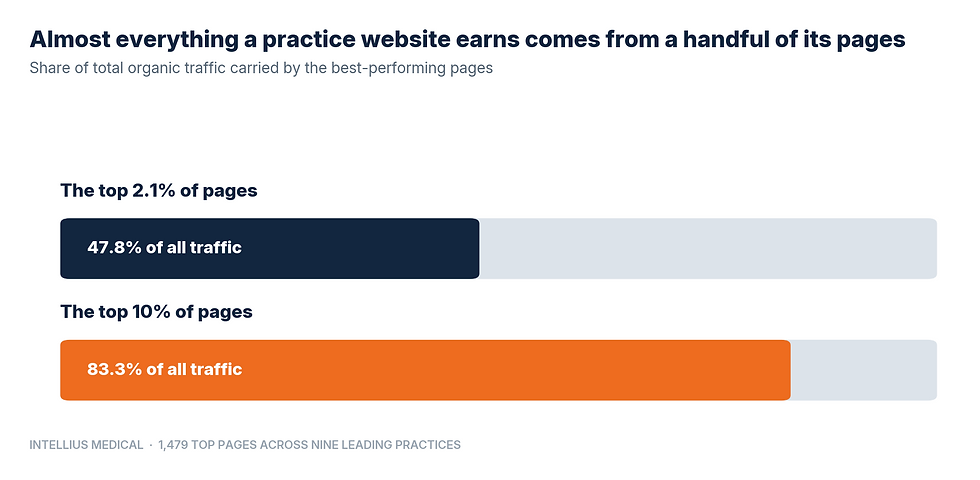
Data exhibits: Intellius Medical original research, 2026. 100 leading plastic surgery practices across 20 US metro markets, plus 17,469 ranked keywords and 1,479 top pages analysed via Ahrefs. Traffic, keyword and value figures are Ahrefs estimates for US organic search; ad-equivalent value is the cost of buying the same visits through Google Ads.


